








The Legend Returns: Restored 1972 911 Meets 2024 S/T Explained
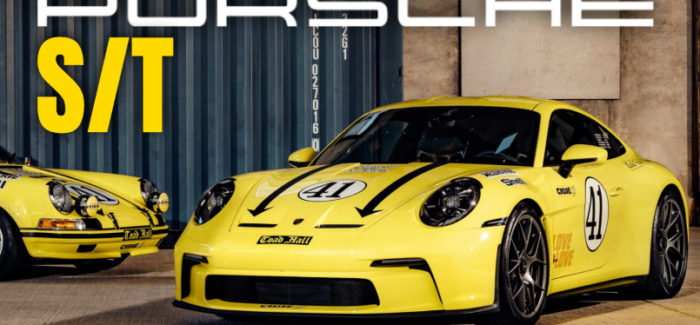
Porsche does not merely build cars; it curates stories. Some are written in tire smoke and stopwatch splits, others in dust and patience. Decades ago, a humble 911 2.5 S/T stunned endurance racing by winning its grand touring class at Le Mans in 1972, then vanished into obscurity until a battered shell surfaced in a California barn. Most machines would have ended there. This one was given a second life.
Porsche Classic stripped it to bare metal and started counting hours instead of laps. More than 1,000 hours of bodywork and roughly two and a half years of painstaking craftsmanship returned the car to its original Light Yellow finish, paint code 117. Rivets, welds, textures—everything feels period-correct, right down to the way light slides across the panels. It looks again as if it just rolled out of Stuttgart in the early seventies, ready to chase the horizon.
Across the same garage sits a modern echo: a 2024 911 S/T, commissioned through Porsche’s Sonderwunsch program. It wears the same rare Light Yellow, hand-applied even onto carbon fiber components that famously challenge paint experts. The details continue the homage—magnesium wheels in Darksilver, black brake calipers, and a focused black interior that whispers lightweight intent. Yet this car is very much today’s 911 at heart: a 4.0-liter naturally aspirated flat-six with 525 horsepower, a 6-speed manual gearbox, and an eager redline brushing 9,000 revolutions per minute. It is analog where it matters and surgical where it counts.
Together, the restored racer and the bespoke S/T show how Porsche treats heritage like a living material. One car wears its past openly, scars and all, now replaced by careful authenticity. The other channels memory into motion, translating history into a configuration you can feel in your fingertips and hear in the last thousand revolutions before the shift light flares. This is how Porsche keeps its legends breathing—by letting enthusiasts personalize reverence and engineers tune nostalgia.
What makes the pairing powerful is not just matching paint or magnesium wheels. It is the through-line of purpose. The 1972 car proves that a lightweight 911 can punch well above its weight when ambition outruns expectation. The 2024 S/T proves that the same spirit still lives inside a manual gearbox and a naturally aspirated heart. Different eras, shared DNA.
Submit a Comment