








Robot Fights and AI Sports You Have to See to Believe – WRC 2025 Highlights”
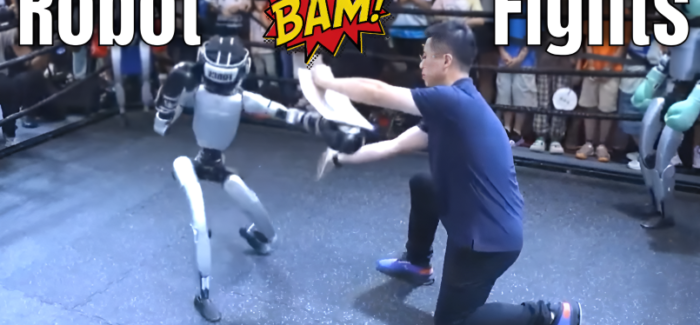
The 2025 World Robot Conference turned into more than just a showcase of advanced robotics — it became a stage for battles, competitions, and sports unlike anything seen before. This year, engineers, scientists, and robotics enthusiasts from across the globe gathered to witness how far artificial intelligence and mechanical design have come, with events that blended high-tech engineering with pure entertainment.
One of the biggest crowd-pleasers was the humanoid boxing match. These were not remote-controlled toys but autonomous machines equipped with sensors, balance systems, and pre-programmed fighting strategies. Robots bobbed, weaved, and threw punches with surprising accuracy. The star performers included the latest generation GI humanoids from Unitree Robotics, known for their agility and stability. The match had moments that left the audience gasping — one robot was knocked to the floor, paused for a second, then got back up and resumed the fight. This was not just for show; the event was designed to push robotic engineering closer to human-level reaction speed and coordination.
Sports fans were also treated to the first-ever AI-powered 3-on-3 soccer match played entirely by humanoid robots. These robots used computer vision to identify the ball, track opponents, and decide whether to pass, dribble, or shoot. Powered by deep reinforcement learning algorithms, they made tactical decisions on the fly. The match consisted of two 10-minute halves, and while the movements were not as fast as human athletes, the precision and teamwork on display were remarkable. For many attendees, it was a glimpse into a future where AI athletes might compete alongside humans in mixed-format events.
The conference also introduced the World Humanoid Robot Sports Games, a multi-event competition scheduled to run from August 15 to 17. Across 19 events, robots will compete in three main categories: athletic contests like sprints and long jumps, performance events such as dance routines, and scenario-based challenges simulating real-world environments like hospitals or industrial sites. These games are more than just a spectacle; they are a testing ground for robotics applications in health care, disaster relief, and manufacturing.
What stood out this year was how these competitions are no longer simple demonstrations of robotic motion. They are now fully fledged contests that stress-test machines in ways that accelerate innovation. Engineers are using these events to identify weaknesses in robot design, improve battery efficiency, enhance AI decision-making, and create more lifelike movement patterns. The robot fights and sports games are, in a sense, the Formula 1 of robotics — high-stakes, high-speed development labs disguised as entertainment.
For spectators, the energy in the arena was infectious. Every time a robot landed a perfect punch or executed a clean soccer pass, the crowd roared. Kids pointed and cheered, while industry professionals took notes and recorded videos for later analysis. The mix of fun and science made the 2025 World Robot Conference a reminder that robotics is not only about automation or industrial work but also about creativity, sport, and human connection.
With technology advancing at this pace, it is only a matter of time before robot sports gain their own leagues and fan bases. This year’s conference may well be remembered as the moment when competitive robotics took its first major leap into the mainstream. The events here proved that robots can entertain, inspire, and even compete in ways that challenge our ideas about what machines are capable of. The future of sports — and maybe even combat — could very well include both human and robotic athletes sharing the same stage.
Submit a Comment