








Ranger Super Duty: The Heavy Duty Work Truck Your Ute Cannot Match
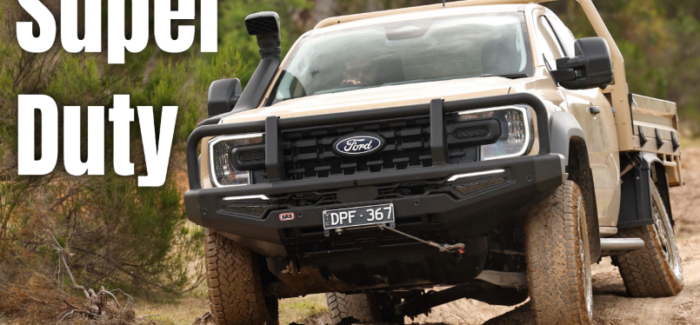
Out in the Australian bush, a work truck is either tough enough or it simply does not last. The Ford Ranger Super Duty is built for the people who live in that world every day. It takes the familiar Ranger formula and turns the toughness dial up, with a heavier duty chassis, serious towing and payload capability, and smart tech that actually helps when you are loaded up, off road, and far from help.
Ford did not just decide to add a badge and some extra chrome. The Super Duty name has a long history inside the company, and it only goes on vehicles that are expected to handle brutal workloads, day in and day out. That same mindset has been applied here. Engineers started with the latest Ranger platform because it is already strong, comfortable, and safe, then reworked it to suit people who kept saying the same thing: “We need a truck that can carry more and go further into the rough stuff without jumping up to something huge and hard to maneuver.”
To understand what those customers really needed, Ford spent time with forestry crews, land managers, emergency services, and fleet operators who drive into remote areas for a living. The story was always about compromise. Big trucks had the payload but struggled on narrow, rutted tracks. Smaller trucks could get through, but ran out of capacity or durability. Ranger Super Duty was created to bridge that gap, giving medium pickup dimensions with capability that pushes into heavy duty territory.
Under the bonnet sits a 3.0 litre V6 turbocharged diesel engine tuned to meet strict Euro 6.2 emissions standards, supported by upgraded cooling to keep temperatures under control when towing or crawling for hours in low range. The team raised the breathers for the differential, transmission, fuel system, and transfer case to help protect them from dust, water, and mud. Combined with a water wading depth of 850 millimetres, that means this truck is designed to keep going when the track disappears under a river crossing or a deep bog.
Traction is handled by an advanced four wheel drive system with a two speed transfer case that uses larger, stronger components than a regular Ranger. The low range gearset takes inspiration from the F Series Super Duty, giving serious control when you are inching down a rocky descent or dragging heavy equipment up a steep climb. Seven selectable drive modes, including Normal, Eco, Tow and Haul, Mud and Ruts, Sand, and Rock Crawl, adjust the way the engine, gearbox, and stability systems behave, making it easier to match the truck to the terrain. Front and rear locking differentials are standard, with a front unit derived from the Bronco Raptor but strengthened for even heavier loads.
Beneath it all is a reinforced frame with upgraded front and rear driveshafts and a new heavy duty rear axle carrying the biggest differential ever fitted to a production Ranger. Eight stud wheel hubs with larger bolts help spread the load, and the chassis includes accessible mounting points to make life easier for body builders and accessory fitters. Whether it becomes a fire truck, a service rig, a remote area support vehicle, or a serious touring build, the Ranger Super Duty is meant to arrive from the factory ready to be turned into a specialist tool.
Ford has also given cab chassis buyers something new in terms of technology. An integrated rear assistance bar bundles together features like a 360 degree camera, front and rear parking sensors, blind spot monitoring that works with trailers, and reverse brake assist with cross traffic alert. These systems are there to reduce stress and fatigue when maneuvering a long, heavy rig in tight depots, crowded work sites, or narrow bush tracks.
To earn the Super Duty name, the Ranger went through a development program that sounds more like punishment than testing. At Ford’s You Yangs Proving Ground, engineers repeatedly drove it through a custom mud course until more than 600 kilograms of thick, sticky mud was packed into every nook and cranny. This mud adds weight, traps heat, and attacks components. The goal was to find weak points and eliminate them. The truck was also hammered over the infamous Silver Creek durability track using autonomous driving robots, sent through corrosion baths, worked hard on towing dynos, and pushed through serious off road loops.
Engineers then took prototypes into the real world. One was built up as a light attack fire truck running close to a 4,500 kilogram gross vehicle mass and sent to shadow fleet teams on the kind of tracks their current vehicles could not always reach. Others were used on remote cattle stations, hauling fencing materials, towing heavy field rollers, and generally living the same life as the station vehicles they were meant to complement or replace.
Inside the cabin, the Ranger Super Duty backs up all that muscle with smart tools to help drivers work more precisely. Onboard scales use suspension sensors to estimate payload and show it on the central SYNC 5 screen, so you have a better idea of how much weight is on the truck. Smart Hitch helps you estimate the tongue weight of a trailer to keep things stable and safe when towing. An off road shortcut button on the console brings up a dedicated screen showing driveline status, steering angle, pitch and roll, and gives quick access to features like Trail Control, which acts like low speed off road cruise control, and Trail Turn Assist, which can tighten your turning radius on loose surfaces.
In the end, the Ranger Super Duty feels like a truck built with real people and real jobs in mind, not just a marketing idea. It is engineered for those who spend their days far from sealed roads, who need reliability more than flash, but still appreciate comfort and technology that genuinely makes work easier.
Submit a Comment