








New Ducati Monster (2026) First Look — Power, Weight, Tech Explained
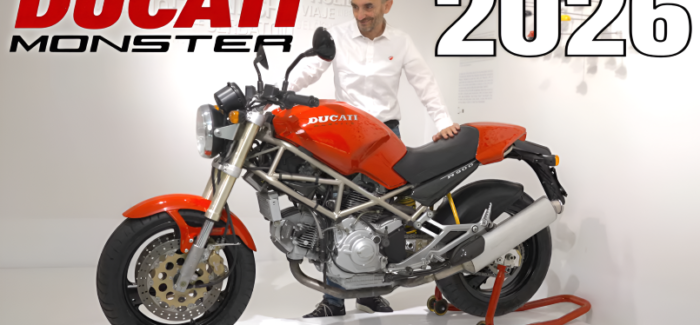
The Ducati Monster is not just another naked sport motorcycle; it is the machine that taught a generation what “everything you need and nothing more” feels like on real roads. From its first appearance in 1992 to the latest evolution unveiled today, the throughline is unmistakable: pure design, a playful engine with real-world punch, and a chassis that invites you to carve every corner. What changes now is how far Ducati has pushed lightness, technology, and usability without sanding off the Monster’s attitude.
Inside the Ducati Design Center, the brief sounds simple: tank, engine, two wheels, a saddle, and handlebars. The execution is where the magic happens. The new model brings back the muscular tank volume longtime fans remember while keeping the clean, modern flyline that makes a Monster a Monster at a glance. Vents at the tank’s leading edge help the steering angle and nod to the second generation, while the glossy Full LED headlamp with twin C-shaped running lights links the bike to the latest Ducati family look. Small details carry big emotion: textured side panels to “feel” the air moving off the radiator, and tiny etched coordinates to Borgo Panigale for anyone who wants a breadcrumb trail back to where the story began.
The tail is lean and purposeful. An Unica seat rides on ultra-light composite subframes tied into a trellis rear structure, honoring the visual language that built the Monster legend. You can choose the standard or the Plus version with a seat cowl and flyscreen, in Ducati Red or Iceberg White, then layer on dedicated accessories like a sport seat, a Termignoni-developed exhaust, and carbon fiber or billet aluminum touches. A refreshed logo pulls the 1993 tank silhouette into a sharp, stylized “M” that says exactly what this bike is without a single extra line.
Underneath the style, Ducati’s engineering team rethought the heart of the bike. The compact, load-bearing V2 is rotated rearward by 20 degrees to improve weight distribution and package refined systems neatly inside the V. Hiding cooling hardware cleans up the silhouette; using the engine as a structural element pares the frame to the essentials. The payoff is a running-order weight without fuel of 175 kg, a number that puts the Monster right at the pointy end of its class and you can feel it the instant you drop the clutch.
Performance is tuned for the real world. Variable valve timing constantly adjusts intake advance so you get urgency at high rpm, smooth torque where you spend most of your riding life, and clean, easy drive in a tall gear around town. Output is 111 horsepower and 91 newton meters of torque, with more than 70 percent available from 3,000 rpm and over 80 percent between 4,000 and 10,000 rpm. Four Power Modes — High, Medium, City, and Low — map the throttle and response to your mood, while Ducati Quick Shift 2.0 debuts on the Monster for crisp, fast upshifts and downshifts courtesy of a rotary sensor on the gear drum. When you do need the clutch, the lever takes 15 percent less effort. Ownership rhythm is friendly, too: valve clearance checks every 45,000 km and oil every two years or 15,000 km.
Point it through town and the Monster feels like it reads your mind. The light front, big steering lock, and easy throttle let you thread traffic without stress. Aim it at a canyon and the bike wakes up. A stiff, supersport-inspired monocoque frame, quality Showa suspension with adjustable rear preload, and a serious brake package — twin 320 mm front discs with Brembo radial calipers and a radial master cylinder plus a 245 mm rear — give you trusted control. Ducati even tuned the front pad compound for a softer initial bite, making stops smoother for newer riders without sacrificing stopping power. Pirelli Diablo Rosso IV tires deliver fast warm-up, precise feedback, and confidence in the wet that belies how sporty they look.
Approachability is baked in. The 815 mm seat height, reshaped seat and tank profiles, and optional suspension-lowering kit with a further 20 mm lower seat can bring the perch down to 775 mm for those who want it. The engine’s character is your ally; it pulls cleanly at low rpm and hits with that signature Monster shove from 3,000 to 4,000 rpm, so “fun” does not require “fast.” Four Riding Modes pair with the Power Modes to tailor traction, throttle, and braking feel to conditions.
Electronics are complete and transparent: Ducati Traction Control, wheelie control, and engine-brake control are all there, managed through a crisp 5-inch color TFT with Day/Night themes and two info layouts. Quick Shift 2.0 is standard. Add cruise control, Ducati Multimedia System for calls and music, and Turn-By-Turn navigation if you want the full daily-rider toolkit. It is still “everything you need,” just with a little more to make the everyday better.
The Monster has always been a people’s story, too — the designers who grew up on early carb bikes, the engineer who turned a show encounter into a 25-year career, the rider who bought her first Monster before she could even hold a full license and later got her first knee down on track. That is the energy this new generation carries: respectful of the past, fully modern in feel, and built to make more memories. If the name on the tank is the headline, the ride is the exclamation point.
If you are into bikes that feel alive in your hands and effortless under you, this Monster belongs on your short list. And if you enjoyed this deep dive, do not forget to like, subscribe, and hit the notification bell — it helps us bring you more of the good stuff.
Submit a Comment