








Neue Klasse Starts Here: Debrecen’s High-Tech BMW iX3 Assembly Revealed
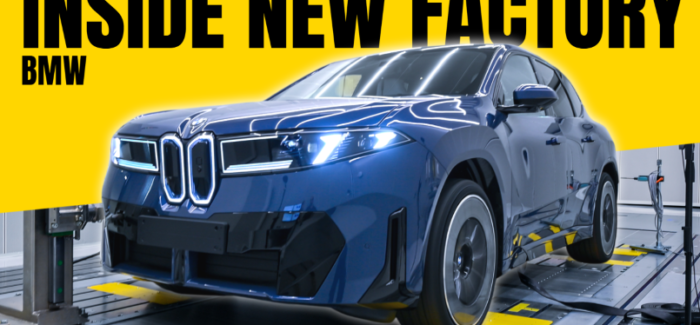
BMW has reached the home stretch before its first Neue Klasse model hits the line. Series production of the new BMW iX3 begins in late October at the all-new Debrecen plant in Hungary, a site built from the ground up to live the company’s iFACTORY vision: fully digital planning, efficient flows, and production powered without fossil fuels. It feels like a turning point you can almost touch—cleaner energy, smarter tools, and people trained to make a brand-new era real.
From day one, the factory was modeled as a virtual twin so every station could be tested before the first machine was bolted down. In the body shop, nearly 1,000 robots work within simplified joining processes that cut complexity and boost consistency. Design touches born from early collaboration—like an invisible door seal that visually links glass to metal—signal the Neue Klasse’s fresh design language while maximizing space for a larger, more capable battery.
The paint shop is where the sustainability math really lands. Building an iX3 accounts for about 80 kilograms of carbon-dioxide equivalent across Debrecen and in-house parts production—a reduction of roughly two-thirds versus comparable models. For Debrecen alone, the figure drops to about 34 kilograms per vehicle at full capacity. Electricity comes from renewable sources, with a 50-hectare on-site solar field covering around a quarter of the plant’s annual needs. Surplus solar feeds a 1,800 cubic-meter thermal storage system rated at 130 megawatt-hours, while heat-recovery loops trim energy use by up to 10%. The result: as much as 12,000 tonnes less carbon-dioxide equivalent per year in the paint shop alone.
Assembly is equally connected. The in-house AIQX platform uses sensors and cameras for real-time quality checks, and vehicles themselves will become active participants on the line, sharing diagnostics through the industrial internet of things. An optimized “finger” building layout delivers 80% of parts directly to each station. Autonomous tugger trains move high-voltage batteries to fit points, while smart robots ferry small parts exactly when they are needed.
Debrecen will launch sixth-generation high-voltage battery production with a zero-defect philosophy, digital twins, and end-to-end monitoring. Capacity ramps in stages, and by 2027 the technologies introduced with the Neue Klasse will touch 40 new models and updates.
Submit a Comment