








LandCruiser 300 and Tundra Hybrid Tech: Why Toyota Built Two Different Systems
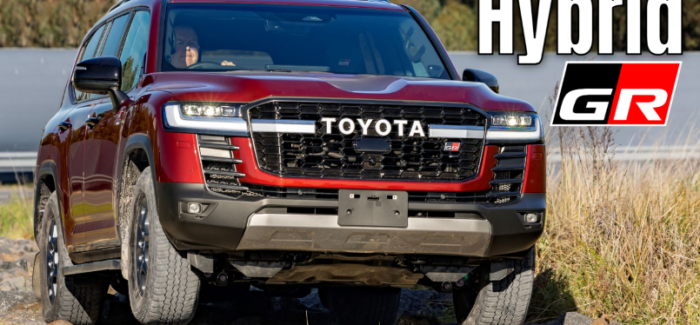
Toyota Australia is taking a bold, two-track approach to hybrid technology, and it is all about giving drivers real choice. After more than 24 years of refining hybrid systems for smooth driving and lower fuel use, Toyota is now offering not one but two kinds of hybrid powertrains tailored to how people actually drive. One path focuses on maximum efficiency for everyday commuting and family life. The other turns up the power for towing, touring, and long-haul confidence. It is a practical strategy: the right powertrain for the right vehicle and the right job.
The performance hybrid system is already at work in the Tundra full-size pickup that arrived in late 2024, and it is heading to the LandCruiser 300 Series in early 2026 for the Sahara ZX and GR Sport grades. At its core is a parallel hybrid layout that pairs a petrol engine with a single electric motor-generator. They can drive the vehicle together or separately, switching seamlessly through a power control unit that reads load and throttle input. Under 30 km/h, the system can glide on electric power alone for quiet takeoffs and precise control. Once speeds climb beyond 30 km/h, the petrol engine remains in operation, with the electric motor stepping in to add instant torque for overtakes, highway merges, or pulling a trailer up an incline.
Drive torque flows through a conventional automatic transmission—on Tundra and the new 2026 LandCruiser 300 Series it is a 10-speed with a lock-up torque converter—so acceleration feels familiar, direct, and linear. Because the power sources can work in tandem or alone, the system delivers strong high-speed cruising, confident towing behavior, and the sort of responsive punch that makes heavy vehicles feel lighter on their feet. There is no learning curve for the driver; it behaves like a well-sorted automatic, just with extra torque on tap and a calmer engine note when the motor does the heavy lifting.
Running beside that is Toyota’s long-evolved efficiency hybrid, the one Australian buyers know from models like Yaris, Camry, RAV4, and Kluger. This is a series-parallel architecture designed for low fuel use, low tailpipe CO2, and everyday refinement. It uses a petrol engine, two electric motor-generators, a pair of planetary gear sets, and a counter gear to the differential. In all-wheel drive variants, a third electric motor powers the rear axle. One motor acts primarily as a generator and engine starter, converting excess engine power into electricity for the hybrid battery. The second motor drives the front wheels and recaptures energy during braking. The planetary gear sets blend engine and motor power for optimum efficiency and act as an electronically controlled continuously variable transmission. By subtly varying rotational speeds within the gearsets, the system mimics a traditional CVT’s seamless ratio changes without belts or pulleys, yielding smooth performance and excellent driveability.
This efficiency system has matured through multiple generations since the original Prius and now sits at generation five in most current Toyota hybrids. Depending on the model, engines range from a 1.5-litre three-cylinder in Yaris to a 2.5-litre four-cylinder in Camry, RAV4, and Kluger. The results speak for themselves: strong real-world economy and a quiet, easygoing character that makes traffic less tiring. It is this everyday polish that has helped Toyota sell more than 570,000 hybrids in Australia, with hybrids making up 48.9 percent of the company’s total sales in 2024 and nine model lines—from Yaris to the seven-seat Kluger—now sold exclusively as hybrids.
The beauty of Toyota’s dual-stream approach is that it respects how different owners use their vehicles. If your life is school runs, city errands, and weekend trips, the efficiency hybrid keeps fuel bills and emissions low while staying smooth and simple to drive. If your life includes long highway drives, outback touring, frequent towing, or heavy loads, the performance hybrid adds electric torque where it matters most while retaining the familiar feel of a geared automatic. In practice, this means a LandCruiser or Tundra that pulls hard, cruises quietly, and still benefits from electric assistance in stop-and-go conditions.
Toyota is not stopping here. As part of a multi-pathway strategy, the company is expanding its hybrid portfolio further, including launching its first plug-in hybrid in Australia in 2026 with the all-new RAV4. That will add meaningful electric-only range to the mix for drivers who can charge at home yet still want the long-distance confidence of a petrol engine for road trips. It is a practical evolution built on choice, not compromise, and it shows how hybrid technology can be tuned for very different kinds of Aussie roads and lives.
Submit a Comment