








Is Tesla’s Optimus Becoming a Martial Artist? Testing Kung Fu Skills
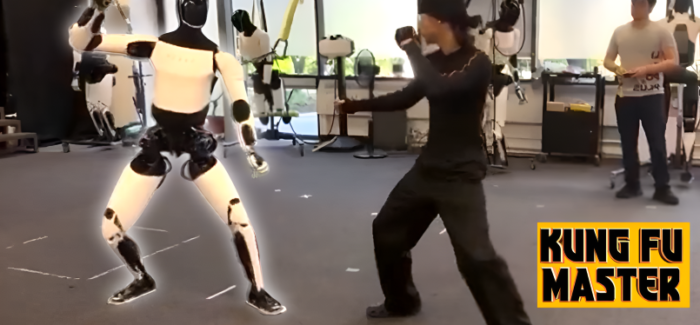
Human Touch was there when the first demonstration for Tesla Optimus learning Kung Fu went live. The clip shows Optimus sparring with a human trainer on mats, stepping and blocking with precise movement. On social media, it quickly became a sensation—fans claiming full autonomy, critics pointing out possible remote control cues, and everyone debating how much of the learning was real intelligence versus careful choreography.
In the video, a martial arts coach throws strikes, and Optimus reacts—parrying, stepping aside, countering. The robot appears balanced and composed, as though it anticipates each move just before it happens. Some angles reveal a tethered rig above the scene, which is common in robotics labs for safety. A staffer nearby holds a small device, prompting skeptics to ask if that is a control lever or emergency stop.
What does this tell us? First, the demonstration is polished and heavily edited. The movements happen in a controlled environment with constraints. It does not resemble real, dynamic sparring with unpredictable attacks. Second, whether the robot is truly “learning” on the fly or executing preplanned routines remains unclear. Optimus might be replaying a set of motions triggered by sensors, or following a hybrid pattern matching system.
We cannot conclude true artificial intelligence mastery from one short video. But it does push boundaries: integrating vision, balance, timing, actuation, and safety all at once. The experiment shows growth from walking, running, and basic object manipulation—adding martial arts gestures is a logical next frontier for humanoid robotics.
What now? Over time, we will watch for longer unedited demos, free sparring against random strikes, and signs of adaptation rather than repetition. One day, robots might not just mimic human motion but compete, learn, and evolve in real time. Of course, there must be ethical guardrails and safety protocols at every step.
Submit a Comment