








Inside Ferrari Elettrica: Battery Secrets, Twin Axles, and Active Suspension Explained
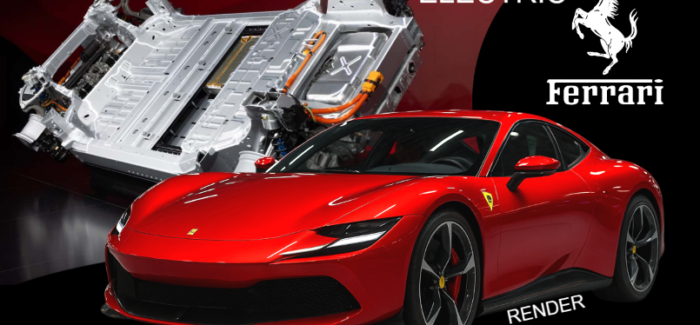
Ferrari has circled Capital Markets Day 2025 as the moment it shows the world the production-ready chassis and core systems of its first full-electric car, a turning point in Maranello’s multi-energy strategy that already spans internal combustion engines, hybrid electric powertrains, and plug-in hybrid electric powertrains. The mission is simple and bold: electrification that still feels unmistakably Ferrari. That promise begins with something deeply traditional for the marque — designing and building the most important parts in house — and stretches into a battery-electric architecture loaded with patented ideas that exist for one job only: deliver speed, feel, and soul.
The groundwork has been years in the making. Lessons started with Formula 1-inspired hybrid experiments in 2009, moved through the 599 HY-KERS in 2010, the LaFerrari in 2013, the SF90 Stradale, and the 296 GTB, and even informed the recently shown 849 Testarossa project. With each step, Ferrari banked knowledge until the technology could honor its values. That threshold is now crossed, backed by over 60 proprietary patents. Sustainability is built in too: both chassis and bodyshell use 75% recycled aluminum, trimming an estimated 6.7 tons of carbon dioxide per car without compromising stiffness or precision.
Proportions are deliberately athletic. Overhangs are short, the driving position sits close to the front axle, and the battery lives low in the floor between the axles. About 85% of the modules occupy the lowest plane possible, dropping the center of gravity by 80 millimeters versus a comparable internal combustion engine model and sharpening the car’s rotation and stability. At the rear, Ferrari debuts a separate elasticized subframe designed to filter noise and vibration while preserving lateral stiffness, so the chassis still talks to the driver the way a Ferrari should. The third generation 48 volt active suspension system — evolved from the Purosangue and the F80 program — spreads cornering forces more intelligently across all four contact patches, increasing comfort and discipline at the same time.
The powertrain is a twin-axle symphony executed entirely in house. Each axle carries a pair of permanent magnet synchronous motors with motorsport-derived Halbach array rotors for intense torque density. The front axle reaches 3.23 kilowatts per kilogram with peak efficiency of 93%, while the rear axle climbs to 4.8 kilowatts per kilogram at the same peak efficiency. The front inverter is fully integrated into the axle, delivers up to 300 kilowatts, and weighs just 9 kilograms — packaging that pays back in agility and thermal control. A disconnect system lets the front axle decouple at any speed to run pure rear-wheel drive for efficiency, then re-engage seamlessly when conditions demand traction or the driver wants maximum attack.
The battery is Ferrari’s own, mounted as structure within the floor. Energy density is almost 195 watt hours per kilogram, a best-in-class figure, and the pack’s construction contributes to overall body stiffness. Cells concentrate toward the vehicle center to cut polar moment; cooling plates and internal channels equalize temperatures and add crash protection without mass bloat. System voltage sits around 800 volts, with current capability sized for serious track work. The integration is thoughtful: replaceable modules, short internal busbars, and a layout designed for serviceability, so long-life ownership aligns with Ferrari’s standards.
Control is everything. The Vehicle Control Unit samples and coordinates the car’s dynamic state 200 times per second, predicting and blending suspension, torque vectoring, and steering interventions. Three driving modes — Range, Tour, and Performance — adjust energy flow and traction philosophy, while the shift paddles unlock five rising “torque steps” that layer on acceleration with a delicious, near-seamless surge. Pull the left paddle and you dial in progressively stronger regenerative deceleration that feels like tailored engine braking, perfect for threading a mountain road without touching the pedal more than you have to.
Even the sound leans into authenticity. Rather than imitate an internal combustion engine, Ferrari amplifies real mechanical vibrations captured by a high-precision sensor mounted to the rear power unit structure. Think electric guitar: the instrument makes the vibrations, the amplifier makes them visceral. In calm driving, the cabin stays quiet; lean on the power or snap through torque steps and the soundtrack swells in sync with what your hands and hips already feel.
Underneath, the active suspension hardware gets smarter and lighter. A revised ball screw with a 20% longer pitch reduces inertial loads, the dampers drop about 2 kilograms per corner, and an integrated thermocouple stabilizes behavior across temperature swings. The suspension now works as part of a complete actuation set with four motors, four-wheel steering, and torque vectoring, giving Ferrari unprecedented authority over vertical, longitudinal, and lateral forces simultaneously. It reads like engineering, but it lands as sensation: the body calm, the tires alive, the driver grinning.
The inverters push packaging and control to the edge, anchored by a Ferrari Power Pack module with silicon carbide switchgear, dedicated gate drivers, and integrated liquid cooling. Switching frequency varies from 10 to 42 kilohertz, chosen for the moment to balance responsiveness, efficiency, and acoustic refinement. A rear-axle strategy called toggling periodically shifts the inverter between active and standby states to keep it in the sweet spot, adding roughly 10 kilometers of cruising range without dulling pedal response. Order noise cancellation software counteracts unwanted current harmonics, trimming both high-pitched whine and electrical losses while preserving fidelity at the tire contact patch.
On the wheel, two selectors mold the car to mood and road. The familiar right-side Manettino spans Ice through Wet, Dry, Sport, and an uncompromising ESC-Off setting that leaves only active suspension and front-axle torque vectoring assisting the rear axle’s playful freedom. The left-side eManettino manages the energy strategy — output ceiling, two-wheel or all-wheel drive, and performance windows — so you can choose calm efficiency or relentless thrust, moment by moment.
The tires were co-developed specifically for this platform with a simple but tough brief: cut rolling resistance by 15% without losing grip in any weather. The lower center of gravity reduces load transfer, which let engineers rethink carcass construction. The result is a menu of five dedicated options, from dry-focused compounds to a winter specification and a run-flat choice, all tuned to keep efficiency high and feedback clean.
This is how Ferrari does electric: less about chasing a spec sheet, more about protecting the magic of connection.
Submit a Comment