








Faster Than Rimac: Yangwang U9 Track Edition Hits 293.54 MPH
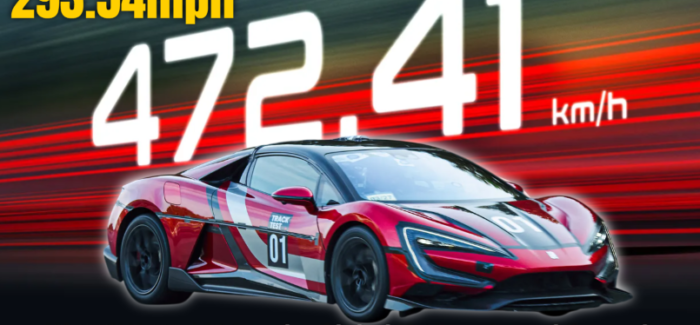
Everyone loves to argue about what makes a true hypercar. Today, the Yangwang U9 Track Edition lets its numbers do the talking. German racer Marc Basseng has pushed this all-electric monster to a measured top speed of 293.54 miles per hour at the Automotive Testing Papenburg proving ground. That is not just quick; it is a clear statement. It makes the U9 the fastest electric production car on the planet right now, edging past both the Rimac Nevera R at 268 miles per hour and the Aspark Owl at 272 miles per hour.
What makes this run so compelling is how fast the development curve has climbed. Basseng had already hit 233 miles per hour in the standard U9 about a year ago. Coming back to the same venue and adding nearly 60 miles per hour to the top end is not a small step; it is a leap that hints at major gains in power delivery, chassis control, and the way this car slices the air.
Power is the headliner. Where the regular U9 already delivers a massive 1,287 brake horsepower from four electric motors, the Track Edition turns the dial well past familiar territory with a claimed output north of 2,958 brake horsepower. That figure reads like a typo until you watch how ferociously the car builds speed. The sensation is less about a single big shove and more about seamless, never-ending thrust—no gearshifts to break momentum, just a clean, linear surge.
Under the skin sits what Yangwang calls the world’s first mass-produced 1,200-volt ultra high voltage vehicle platform. The benefit is not marketing fluff. Higher system voltage allows the drivetrain to move the same power with less current, which cuts electrical losses and heat, supports more consistent peak performance on long pulls, and shortens charging times when the car is off the track. Pair that with independent torque vectoring that monitors conditions and adjusts power distribution more than 100 times per second, and you begin to understand how a two-ton electric supercar feels agile at extralegal speeds.
Chassis control is handled by the DiSus-X Intelligent Body Control System—the same party trick hardware that can make the U9 “dance” and hop in show demos. On track, it is all business. The system works to keep the body flat and composed under heavy acceleration, braking, and high-g cornering, letting the tires do their job without the suspension fighting them. The Track Edition also trades the standard car’s towering rear wing for a cleaner tail, while adding a larger carbon fiber front splitter and bespoke semi-slick tires from Giti. Less drag, more front-end bite, and a contact patch built for heat—exactly what you want when the speedometer needle is diving deep into the 200s.
Aerodynamics deserve a nod. At these speeds, stability is everything. The Track Edition’s revised aero kit appears to prioritize low drag and clean airflow management without sacrificing the downforce necessary for stability across Papenburg’s long straights and banked sections. The removal of the giant rear wing suggests that the underbody and diffusers are doing more of the heavy lifting, while the front splitter helps seal airflow and reduce front lift.
The human element matters, too. Basseng’s comment that he “never expected to break [his] own record so soon” says a lot about how quickly the package is evolving. Confidence at nearly 300 miles per hour does not come from power alone. It comes from a balanced car that talks to the driver, a tire compound that stays in its window, and systems that keep the platform calm when the world is whipping by like a time-lapse.
Whether you are a die-hard fan of internal combustion or an electric early adopter, this run puts Bugatti and Koenigsegg on notice and reframes what an electric production car can do in the real world. If the U9 Track Edition can sustain this level of performance lap after lap—and not just in a single top-speed pass—it will force the entire industry to rethink the boundaries of electric performance.
Submit a Comment