








Cybertruck 2025 Crash Results Explained: Strong Structure, Surprising Headlight Problem
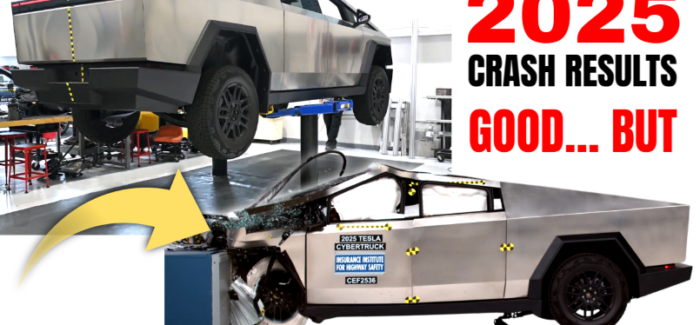
The 2025 Tesla Cybertruck just faced the Insurance Institute for Highway Safety’s tougher moderate overlap front crash test, the version that puts more attention on rear-seat protection as well as the driver. For trucks built after April 2025, the Cybertruck earns a good overall rating thanks to structural updates under the front of the vehicle. That build-date detail matters for buyers because it ties the rating to what is actually on the road.
Tesla changed the front underbody structure on post-April trucks to better manage crash energy. In plain language, the cabin holds its shape and the belts and airbags do their jobs more effectively. If you are shopping, look at the certification label on the driver door or B-pillar to confirm when a specific truck was built so you know which engineering you are getting.
In the lab, the driver side dummy shows strong protection. Chest compression measures just 22 millimeters and the head injury criterion comes in at 494—numbers that sit comfortably in the good range for this class and test. Footwell and steering column movement are well controlled, a sign that the safety cage stayed intact and kept hard points away from the driver.
The rear seat tells the other half of the story. The rear passenger’s head and neck protection are good, while the chest result is acceptable, reflecting a moderate risk by the test’s newer, more demanding criteria. The lap and shoulder belt stayed where they should, which is what you want to see in a big pickup used to carry family or friends.
Forward-looking tech also pulls its weight. In daytime and nighttime track scenarios, the Cybertruck’s pedestrian automatic emergency braking system avoids impacts in common test setups at 12, 25, and 37 miles per hour. The system provides timely warnings and applies the brakes early, which is exactly the kind of behavior that can keep a close call from becoming a crash on a dark street.
Lighting is the Cybertruck’s weak link. The headlights earn a poor rating because the low beams create excessive glare for oncoming traffic. Visibility straight ahead is decent, but glare is penalized heavily for safety reasons. If you do a lot of night driving, that is worth factoring into your decision until Tesla revises the hardware or tuning and that change is evaluated.
Everyday usability items land in the middle. Seat-belt reminder performance is rated marginal due to alert timing and sound levels, while the child-seat anchor setup earns an acceptable for access and clarity. Neither is a deal-breaker, but both are areas where small improvements would make the truck easier to live with.
Two big test boxes—small overlap front and the updated side impact—are still pending. Because of the poor headlight score and missing results, the Cybertruck does not qualify for a Top Safety Pick award right now. The core takeaway is simple: trucks built after April 2025 do a good job protecting people in the key moderate overlap crash, the pedestrian emergency braking is strong, and the headlights need work.
Submit a Comment